

Trailer Safety 101 | Tips For Towing a Motorcycle Behind Your Truck Before You Hit the Open Road
 Neighbors Trailer
Oct 31, 2022 1010 8 min read
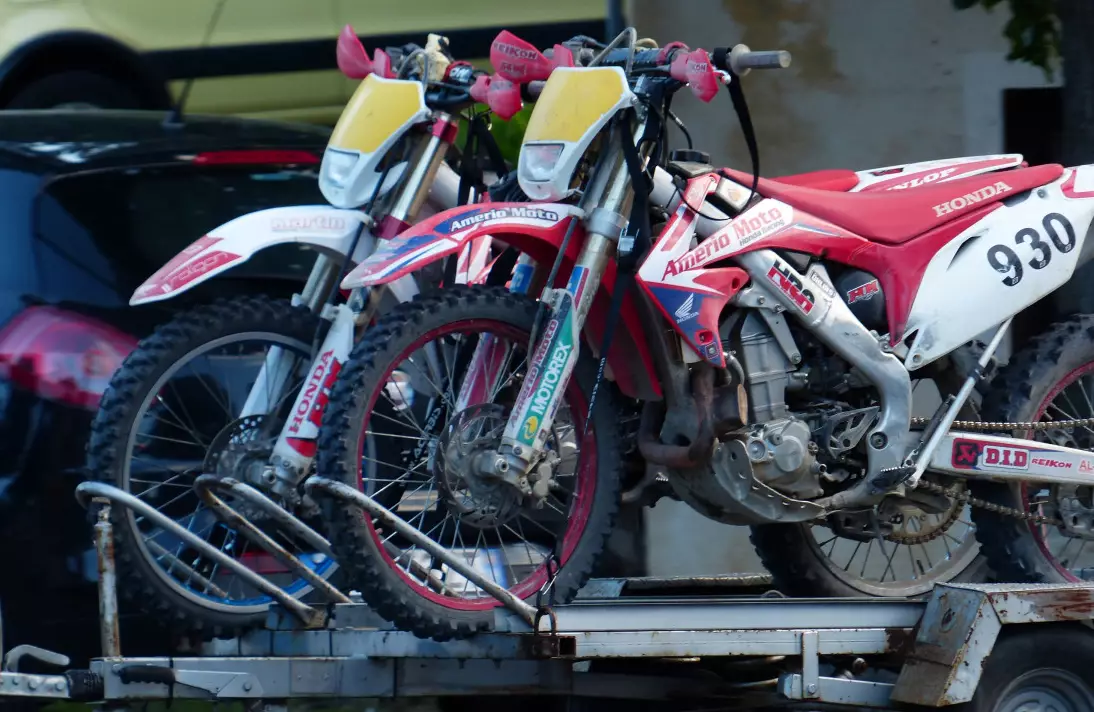
Towing a motorcycle behind your truck on a rental trailer is one of the safest ways to transport your bike across long distances. It protects the engine from highway fatigue, eliminates exposure to poor road conditions, and lets you arrive at your destination with a fresh bike ready to ride. But loading a motorcycle onto a trailer incorrectly can cause serious damage or even an accident on the highway. This guide covers everything you need to know about choosing the right trailer, securing your bike, and towing safely.
Choosing the Right Trailer for Motorcycle Transport
Not every trailer is suitable for hauling a motorcycle. The right choice depends on your bike's weight, the number of motorcycles you are transporting, and whether you want open or enclosed protection. Our ATV, UTV and motorcycle trailer calculator recommends a trailer size from your bike’s weight and how many you are hauling. The table below outlines your main options.
| Trailer Type | Best For | Key Features to Look For | Weather Protection |
| Open utility trailer | Single bike, short to medium hauls | Tie-down rails, loading ramp, wheel chock | None (use a tarp) |
| Enclosed cargo trailer | Single or multiple bikes, long hauls | Reinforced floor, interior tie-down points, ramp door | Full protection |
| Dedicated motorcycle trailer | Single bike, precision fit | Built-in wheel chocks, low ramp angle, stabilizer jacks | Usually open |
| Flatbed trailer | Multiple bikes or bike plus gear | Side tie-down rails, generous deck space, load rating | None (use tarps) |
When renting a trailer for your motorcycle, verify that the trailer's Gross Vehicle Weight Rating (GVWR) comfortably exceeds the combined weight of your bike, gear, and any additional cargo. Most motorcycles weigh between 400 and 900 lbs, but loaded touring bikes can exceed that. Always give yourself headroom in the load rating.
Tow Vehicle Requirements
Before renting, confirm your tow vehicle can handle the trailer. A half-ton truck with a Class III hitch is more than adequate for most single-motorcycle setups. Our towing capacity calculator confirms your truck’s rated limit against the loaded trailer weight. Key checks include:
- Tow rating: Your truck's maximum rated towing capacity must exceed the loaded trailer weight
- Hitch class: Class II (up to 3,500 lbs) works for most single-bike setups; Class III handles heavier rigs
- Trailer wiring connector: Make sure your truck's trailer plug matches the trailer's connector (4-pin flat is most common)
- Tongue weight: Aim for 10 to 15 percent of the total trailer weight on the hitch ball, not more
How to Load a Motorcycle onto a Trailer
Improper loading is the leading cause of motorcycle transport damage and trailer accidents. How you position the bike sets the trailer’s balance, and our weight distribution planner helps you place the load for stable towing. Follow these steps every time:
- Park the trailer on level ground and verify the coupler is properly latched to the hitch ball
- Extend the loading ramp fully and check that it is stable before walking the bike up
- Walk the motorcycle up the ramp in first gear with the engine running; never push a powered-off bike up a steep ramp alone
- Position the bike as close to the forward wall as the trailer allows, centered side to side
- Place a wheel chock under the front tire to prevent forward and backward rolling
- Put the motorcycle in first gear and turn the handlebars straight before strapping
Securing Your Motorcycle: Tie-Down Technique
Ratchet straps are the industry standard for securing motorcycles on trailers. You need a minimum of four straps: two from the handlebars or upper triple clamp to front tie-down points, and two from the frame or subframe to rear tie-down points. Here is the correct sequence:
- Attach the front two straps at roughly 45-degree angles to opposing corners of the trailer
- Compress the front forks by about one-third of their travel as you tighten the front straps
- Attach the rear straps and pull them snug, keeping the bike vertical
- Final tension: the bike should not rock forward, backward, or side to side when you push firmly on the handlebars
- Cover the bike with a canvas or vinyl tarp if you are using an open trailer
Never attach straps to the brake levers, turn signals, exhaust pipes, or plastic bodywork. These points are not load-rated and will break or cause damage under tension.
Most Common Causes of Trailer Accidents When Towing Motorcycles
Understanding what goes wrong helps you prevent it. The chart below shows the most common causes of motorcycle towing incidents based on roadside data.
NeighborsTrailer.com
Driving Tips When Towing a Motorcycle
Towing a trailer changes your truck's handling in ways that catch first-timers off guard. Keep these guidelines in mind on the road:
- Accelerate gradually: The added weight increases stopping distances significantly; give yourself extra following distance
- Brake early and smoothly: Begin braking earlier than you normally would; hard stops can cause trailer sway
- Take corners wide: The trailer tracks inside your truck's turning radius; swing out before turns to avoid clipping curbs
- Reduce speed in crosswinds: Side winds amplify trailer sway, especially with lighter loads; slow down and increase following distance
- Check your mirrors every 30 seconds: Monitor the trailer and bike visually on the highway
- Stop and re-check straps: Pull over after the first 15 to 20 miles to verify that tie-downs are still tight
If you feel the trailer begin to sway, do not apply the brakes suddenly. Instead, ease off the accelerator and let the truck and trailer straighten naturally. Sudden braking during a sway event can cause a jackknife situation.
Pre-Trip Safety Checklist
Before every motorcycle towing trip, run through this checklist:
- Coupler fully latched and hitch pin installed
- Safety chains crossed and attached with adequate slack
- Trailer lights tested: brake, turn signal, running lights
- Trailer tires inflated to spec and showing no visible wear or cracking
- Wheel bearing hubs checked (warm after driving a few miles is fine; hot means a problem)
- Motorcycle secured and not rocking in any direction
- Ramp stowed and secured inside or underneath the trailer
- Load balanced front-to-back with 60 percent of weight forward of the axle
Rental Coverage on Every Booking
When you rent a trailer through Neighbors Trailer, every booking automatically includes NT Protect, the mandatory coverage charged at the time of booking for a few dollars per day. NT Protect covers both the renter and the trailer owner throughout the rental period, so you can focus on loading your bike and getting on the road rather than worrying about what happens if something unexpected occurs.
Frequently Asked Questions
Do I need a special license to tow a motorcycle trailer?
In most U.S. states, a standard driver's license is sufficient for towing a single-motorcycle trailer behind a pickup truck. However, some states require a special endorsement or commercial license if the combined weight of the tow vehicle and trailer exceeds 26,000 lbs. For typical recreational motorcycle towing, a standard Class C license is all you need.
How many ratchet straps do I need to secure a motorcycle?
A minimum of four ratchet straps is recommended: two anchoring the front of the bike and two at the rear. For heavier touring bikes or longer hauls, adding a fifth strap across the center of the frame provides extra security against lateral movement.
Can I use bungee cords instead of ratchet straps?
No. Bungee cords stretch and lose tension over time and are not rated for securing cargo under highway loads. Ratchet straps with a working load limit appropriate to your bike's weight are the correct tool for this job. Look for straps rated at 500 lbs working load limit or higher per strap.
What is a wheel chock and do I need one?
A wheel chock is a cradle that holds your motorcycle's front tire upright and prevents it from rolling forward or backward. It is strongly recommended for any trailer tow. Many motorcycle-specific trailers have built-in chocks; for utility or flatbed trailers, you can purchase a standalone chock that bolts to the trailer deck.
Ready to Rent a Motorcycle Trailer?
Neighbors Trailer connects you with trailer owners in your area who have exactly the equipment you need. Browse listings for open utility trailers, enclosed cargo trailers, and flatbeds to find a unit that fits your motorcycle and your route. Every rental includes NT Protect coverage automatically. Renters must be at least 21 years old to book.
Related Articles
- Trailer Safety 101: Essential Heavy Hauling Tips
- The Used Trailer Buying Guide
- How to Store Your Trailer Safely in the Winter
- The Ultimate Guide to Buying a Utility Trailer
Content updated March 2026